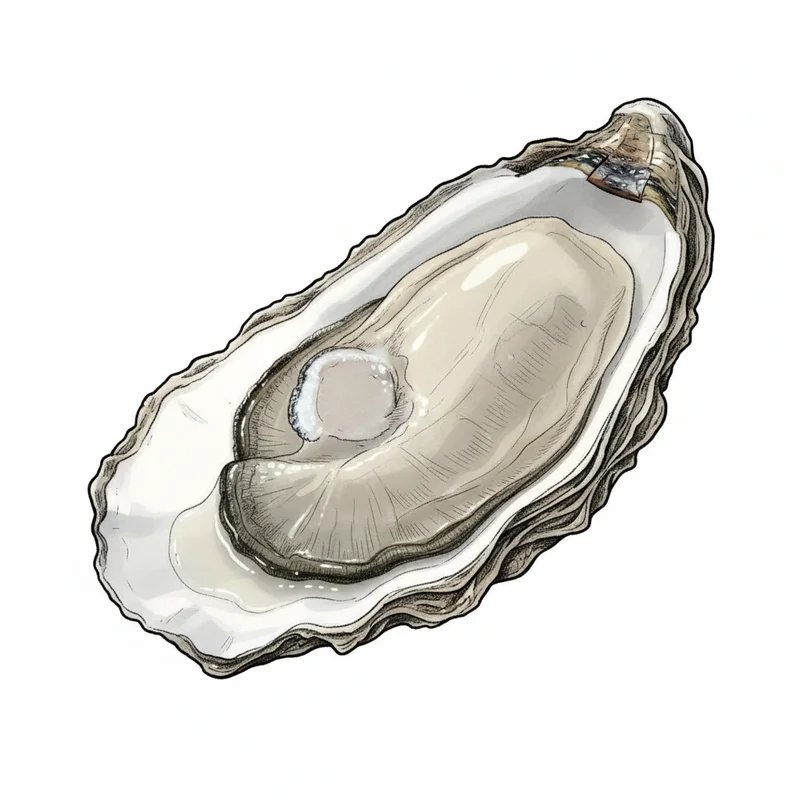
Boomamoto
Crassostrea virginica
A petite, very deep-cupped Cape Cod oyster from Cape Cod Oyster Company, shaped like a West Coast Kumamoto but an Eastern oyster in species and taste. Strong brine up front and a sweet finish.
At a Glance
Boomamoto is an Eastern oyster (Crassostrea virginica) from the US East Coast. It is notably briny (4/5 brininess) and distinctly sweet (4/5 sweetness), with briny, sweet flavors and a finish that is sweet.
Flavor Profile
Finish
Sweet
Expert Notes
Boomamoto is a small, very deep Eastern oyster from Cape Cod Oyster Company, which also grows the Great White. The company says it began as an accident: staff were taking home golf-ball-sized oysters that had grown as deep as they were long, and the farm set out to produce them on purpose. The name is a nod to the Kumamoto, but this is Crassostrea virginica with East Coast salt. The company's sales sheet says seed is raised in upwellers, grown in OysterGro cages and then planted on sandy bottom; its website describes them as extra tumbled and sand-finished, at about 2.5 inches each way and 27 parts per thousand salinity. All the tasting language we found is the grower's: strong brine up front, a sweet finish, and creamy, petite meat in a smooth round shell. The website gives Barnstable as the growing area, and the sales sheet adds Cape Cod Bay and West Bay. Origin & Characteristics
- Species
- Crassostrea virginica
- Native to
- USA
- Grown in
- Barnstable Harbor, Cape Cod, Massachusetts
- Size
- Small (2-3 inches)
- Shell Color
- Smooth and polished, with a white interior
- Meat Color
- Ivory to light gray
Where to Try It
Chicago
- Hugo's Frog Bar & Fish House Gold Coast
On these menus when we checked on October 1, 2026. Raw-bar lists change daily.
What Tasters Say
Across 3 sources, tasters describe this oyster as:
Unique notes: West Coast style oyster with an East Coast taste, mind-blowing sweet finish
"Tasting Notes: Strong brine up front with a sweet finish."
brinysweet
"Always creamy, petite and deep cupped. They have a mind-blowing sweet finish that distinguishes them from anything else."
creamysweetdeep cup
About the Farm
Cape Cod Oyster Company
Grower of several named Cape Cod oysters, among them Great White, Washburn Island and Hammerhead.
History & Background
The company's site gives the size as 2.5 inches deep by 2.5 inches long, salinity as 27 parts per thousand and the growing area as Barnstable, Massachusetts. Its sales sheet gives 2 to 3 inches, 27 to 30 parts per thousand, and a harvest area of Cape Cod Bay, West Bay and Barnstable Harbor. The company's site says seed starts in North Bay and is grown out and harvested in Barnstable Harbor, and lists further farms in Megansett Bay, Waquoit Bay and West Bay. Both say the oysters are available all year, and the website adds that winter oysters are some of the best because growth slows and shells get stronger.
The company calls the oyster a West Coast style oyster with an East Coast taste and describes it as born as a Barnstable kumamoto. It says shuckers like how easily the sturdy shell opens.
Did You Know?
- About as deep as it is long, at 2.5 inches each way
- Started as oysters the farm staff took home
- An Eastern oyster, not a Kumamoto, despite the name
- The sales sheet says they are harvested each morning and shipped 52 weeks a year
Sources & References
This information was compiled from 3 sources.
- Boomamoto Oysters — Cape Cod Oyster Company
- Boomamoto sales sheet — Cape Cod Oyster Company
- Cape Cod Oyster Company — Cape Cod Oyster Company
Similar Oysters
Aunt Dotty
US East CoastA small, tray-grown oyster from Saquish Neck in Duxbury Bay, Massachusetts, from Island Creek Oysters. Intensely salty with a nori-like brine, then a rich, nutty sweetness and dense, toothsome meat.
Johns River
US East CoastA large, bottom-planted Maine oyster from the Johns River estuary in South Bristol, hand-harvested by divers year-round. Briny and unusually fruity, with a sweet, creamy middle, a savory depth and a clean finish.
Lady's Island
US East CoastSustainably farmed South Carolina oyster from the Coosaw River. Large, deep-cupped, and plump with a salt-heavy briny start that gives way to a sweet, clean finish. Handcrafted from hatchery to harvest.
Dennis
US East CoastCape Cod Bay oyster from South Dennis, Massachusetts. Plump meat with high brininess balanced by sweetness. Three years of growth in pristine open ocean waters create a rich, clean, and savory flavor profile.
Dukes of Topsail Sound
US East CoastA very salty North Carolina oyster grown on long lines in Topsail Sound, near Hampstead, by N. Sea Oyster Co. Open-ocean brine up front, then a buttery richness and a sweet finish the farm compares to scallop.
Learn More
The Big Five: A Complete Guide to Commercial Oyster Species
Comprehensive guide to C. virginica (Atlantic), C. gigas (Pacific), C. sikamea (Kumamoto), O. lurida (Olympia), and O. edulis (European Flat)
Read article → Biology & SpeciesThe Atlantic Oyster (C. virginica): From Maritime Brine to Gulf Sweetness
Deep dive into America's indigenous East Coast oyster - flavor profiles, regional variations, and famous varieties
Read article → Merroir & EnvironmentWhat Is Merroir? How Water Shapes Oyster Flavor
Merroir is the marine version of terroir: how salinity, temperature, tides, and plankton in the growing water shape an oyster's flavor. The science, plus how to taste it.
Read article →