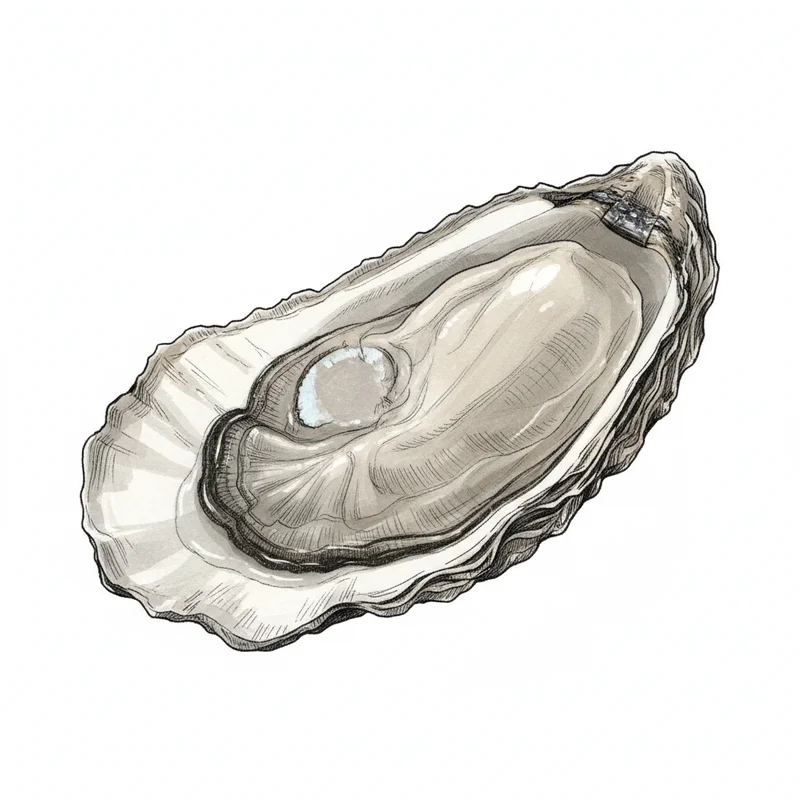
Aunt Dotty
Crassostrea virginica
A small, tray-grown oyster from Saquish Neck in Duxbury Bay, Massachusetts, from Island Creek Oysters. Intensely salty with a nori-like brine, then a rich, nutty sweetness and dense, toothsome meat.
At a Glance
Aunt Dotty is an Eastern oyster (Crassostrea virginica) from the US East Coast. It is notably briny (4/5 brininess) and distinctly sweet (4/5 sweetness), with briny, nutty, sweet flavors and a finish that is rich and nutty-sweet, like walnut.
Flavor Profile
Finish
Rich and nutty-sweet, like walnut
Expert Notes
Aunt Dotty is the small oyster in the Island Creek Oysters family, grown by Skip Bennett on the tidal flats at Saquish Neck, on the far side of Duxbury Bay from the main farm. The oysters spend three years in trays high in the intertidal zone, where they sit out of the water for three to four hours on each tide. Oysterater credits that exposure for strong adductor muscles, tidy cups and extra sweetness. Island Creek describes the taste as intensely salty up front, with a nori-like brine, mellowing into a rich, nutty sweetness it compares to walnut. The cups are petite but the meat is dense. Origin & Characteristics
- Species
- Crassostrea virginica
- Native to
- USA
- Grown in
- Saquish Neck, Duxbury Bay, Massachusetts
- Size
- Small (about 2.5 inches)
- Shell Color
- Gray-white to tan
- Meat Color
- Ivory to light gray
Where to Try It
Boston
- Row 34 Fort Point, Seaport
On these menus when we checked on October 1, 2026. Raw-bar lists change daily.
Charleston
- Chubby Fish Coming Street
On these menus when we checked on October 1, 2026. Raw-bar lists change daily.
Seattle
- The Walrus and the Carpenter Ballard
On these menus when we checked on October 1, 2026. Raw-bar lists change daily.
What Tasters Say
Across 2 sources, tasters describe this oyster as:
Unique notes: nori, bitter walnut, toothsome
"Intensely salty up front with a nori, seaweed-like brine, they mellow into a rich, nutty sweetness, almost like a bitter walnut."
brinynoriseaweedrichnutty
"Dotties have petite cups but are bursting with dense meats giving you a super toothsome bite."
firmdense
"That also makes them extra sweet, a balance to that classic Duxbury brine."
sweetbriny
"They taste just like the descriptors, salinity then sweet. Very easy to love these oysters."
brinysweet
"Wonderful brine and good meat for a smaller oyster."
brinymeaty
About the Farm
Island Creek Oysters
Island Creek Oysters is Skip Bennett's farm in Duxbury, Massachusetts. The Saquish land and marshes that host the Aunt Dotty farm have been in the Bennett family for generations, and the oyster is named for Skip's aunt, the original resident of the family cottage there. Oysterater adds that she lived at Saquish full time, with her lobster traps, into her seventies.
- Cultivation Method
- trays on intertidal flats
History & Background
Oysterater describes Saquish as the barrier island that protects Duxbury Bay from the sea. Island Creek says the Aunt Dotty site is about a 20-minute boat ride from its main farm and can also be reached by truck along the beach. Because the trays are exposed twice a day, the crew can harvest in every season.
Each December the crew takes the growing oysters out of the water and stores them in burlap bags in the cellar of a cottage a few feet from the flats, then returns them in April. Island Creek calls Aunt Dotty the younger cousin of its flagship oyster and the first product of a farm it plans to diversify with clams and scallops.
Did You Know?
- The oysters overwinter in a cottage cellar
- Grow-out takes three years
- The family's deed to the land is said to have needed translating from Old English
- All four Oysterater ratings are five out of five
Sources & References
This information was compiled from 2 sources.
- Aunt Dotty Oysters from Saquish, MA — Island Creek Oysters
- Aunt Dotty Oyster — Oysterater
Similar Oysters
Boomamoto
US East CoastA petite, very deep-cupped Cape Cod oyster from Cape Cod Oyster Company, shaped like a West Coast Kumamoto but an Eastern oyster in species and taste. Strong brine up front and a sweet finish.
Johns River
US East CoastA large, bottom-planted Maine oyster from the Johns River estuary in South Bristol, hand-harvested by divers year-round. Briny and unusually fruity, with a sweet, creamy middle, a savory depth and a clean finish.
Lady's Island
US East CoastSustainably farmed South Carolina oyster from the Coosaw River. Large, deep-cupped, and plump with a salt-heavy briny start that gives way to a sweet, clean finish. Handcrafted from hatchery to harvest.
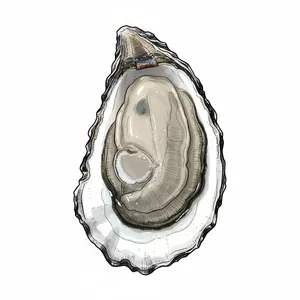
Barnstable
US East CoastA classic Cape Cod Bay oyster from historic Barnstable Harbor. Sweet and nutty with firm, crunchy texture, balanced brine, and a distinctive lobster-stock finish reminiscent of a New England clambake.
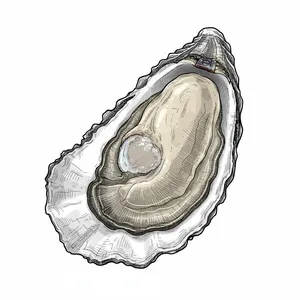
Dennis
US East CoastCape Cod Bay oyster from South Dennis, Massachusetts. Plump meat with high brininess balanced by sweetness. Three years of growth in pristine open ocean waters create a rich, clean, and savory flavor profile.
Learn More
The Big Five: A Complete Guide to Commercial Oyster Species
Comprehensive guide to C. virginica (Atlantic), C. gigas (Pacific), C. sikamea (Kumamoto), O. lurida (Olympia), and O. edulis (European Flat)
Read article → Biology & SpeciesThe Atlantic Oyster (C. virginica): From Maritime Brine to Gulf Sweetness
Deep dive into America's indigenous East Coast oyster - flavor profiles, regional variations, and famous varieties
Read article → Merroir & EnvironmentWhat Is Merroir? How Water Shapes Oyster Flavor
Merroir is the marine version of terroir: how salinity, temperature, tides, and plankton in the growing water shape an oyster's flavor. The science, plus how to taste it.
Read article →