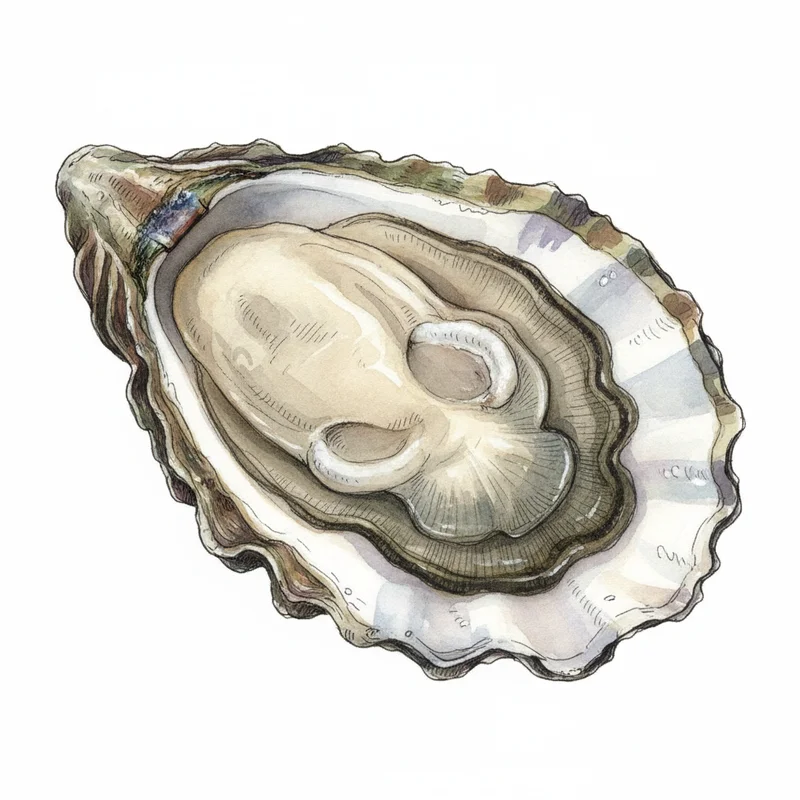
Rock Point
Crassostrea gigas
A small, beach-raised Pacific oyster from Dabob Bay in Washington's Hood Canal. Sweet and savory with melon and cucumber notes, in a hard shell that shucks cleanly.
At a Glance
Rock Point is a Pacific oyster (Crassostrea gigas) from the US West Coast. It is moderately briny (3/5 brininess) and moderately sweet (3/5 sweetness), with sweet, savory, cucumber flavors and a finish that is sweet, with cucumber and melon. It is considered a beginner-friendly oyster.
Flavor Profile
Finish
Sweet, with cucumber and melon
Expert Notes
Rock Point, sold by Penn Cove Shellfish as Rockpoint, is the smaller version of its Dabob Bay oyster: a beach-raised Pacific from Dabob Bay, at the north end of Hood Canal. Chefs Resources says the oysters take about three years to reach 2.5 to 2.75 inches, and that twice-daily exposure at low tide gives them firm meat and hard shells. The flavor descriptions do not line up neatly. Chefs Resources reports a creamy texture, sweet flavor, medium salinity and a cucumber finish. Penn Cove's current list compares the taste to melon wrapped in prosciutto with a gentle, mild brine, while its older spec sheet says salty, grassy, green and umami. The scores here sit in the middle. Origin & Characteristics
- Species
- Crassostrea gigas
- Native to
- Japan
- Grown in
- Dabob Bay, Hood Canal, Washington
- Size
- Small (2.5-3 inches)
- Shell Color
- Hard, sturdy shell
- Meat Color
- Cream to ivory
Where to Try It
San Francisco
- Leo's Oyster Bar Financial District
On these menus when we checked on October 1, 2026. Raw-bar lists change daily.
Seattle
- Elliott's Oyster House Waterfront
On these menus when we checked on October 1, 2026. Raw-bar lists change daily.
What Tasters Say
Across 4 sources, tasters describe this oyster as:
Unique notes: melon wrapped in prosciutto, green
"Rock Point oysters are a small oyster with a creamy texture, sweet flavor, a medium salinity and a cucumber finish."
creamysweetcucumber
"Reminiscent of a slice of melon wrapped in prosciutto, with a gentle, mild brine."
melonsavorymild
"A “salty, grassy, green, umami” flavor comes through in this oysters flavor profile."
saltygrassyumami
"It has salty, grassy, green, umami flavor."
saltygrassyumami
About the Farm
Penn Cove Shellfish
Penn Cove Shellfish of Coupeville, Washington sells Rockpoint as the smaller-sized counterpart to its Dabob Bay oyster. Its product list gives the location only as cobbled beaches of Puget Sound; Chefs Resources places the beds in the northern section of Dabob Bay in Hood Canal.
- Cultivation Method
- intertidal beach culture
History & Background
Dabob Bay is an arm of Hood Canal in Washington. Chefs Resources lists Rock Point as beach cultivated, about three years to harvest, up to 2.75 inches, available all year, with a salinity of 3.1 percent.
The sources disagree on saltiness: mild in Penn Cove's current list, medium at Chefs Resources, and salty in Penn Cove's older spec sheet and at Fortune Fish. A separate company called Rock Point Oyster Company also farms oysters and Manila clams; none of the pages opened for this profile says whether it grows the oysters sold under this name.
Did You Know?
- Penn Cove packs them in units of five and ten dozen
- Beach-raised oysters clamp shut at low tide, which is why they hold their liquor and keep longer
- Penn Cove's old spec sheet called the hard shell a shucker's dream
- Listed size ranges from 2.5 to 3 inches depending on the source
Sources & References
This information was compiled from 4 sources.
- Rock Point Oysters — Chefs Resources
- Our Shellfish — Penn Cove Shellfish
- Rockpoint Oysters — Penn Cove Shellfish
- Rock Point — Fortune Fish & Gourmet
Similar Oysters
Shigoku
US West CoastTumbled Pacific with firm texture. Cucumber, melon, clean brine.
Dosewallips
US West CoastBeach-grown Pacific oyster from central Hood Canal where the Dosewallips River meets the sea. Sweet and cucumbery with a creamy texture, balanced brininess, and a light, clean finish.
Oishi
US West CoastA small, tide-tumbled Pacific oyster from Skagit Bay, Washington. Low in salt, plump for its size, and finished with a clean, lingering cucumber note. The same farm sells its larger grades as Ichiban and Tubby.
Samish Bay
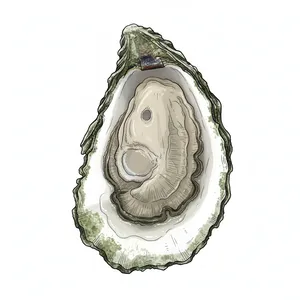
US West CoastBeach-cultured Pacific oyster from historic Samish Bay in Northern Puget Sound. Firm, plump meats with medium brininess, mild sweetness, and a distinctive refreshing cucumber finish. Rustic lichen-green shells.
Aphrodite
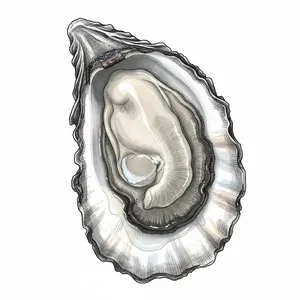
US West CoastA bag-to-beach Pacific oyster from Marrowstone Island on Washington's Olympic Peninsula. Delicate and brine forward, with a sweet, buttery cucumber finish.
Learn More
The Big Five: A Complete Guide to Commercial Oyster Species
Comprehensive guide to C. virginica (Atlantic), C. gigas (Pacific), C. sikamea (Kumamoto), O. lurida (Olympia), and O. edulis (European Flat)
Read article → Biology & SpeciesThe Pacific Oyster (C. gigas): Cream, Cucumber, and the Japanese Legacy
Understanding one of the world's most widely farmed oysters - from Japanese origins to West Coast dominance
Read article → Merroir & EnvironmentWhat Is Merroir? How Water Shapes Oyster Flavor
Merroir is the marine version of terroir: how salinity, temperature, tides, and plankton in the growing water shape an oyster's flavor. The science, plus how to taste it.
Read article →