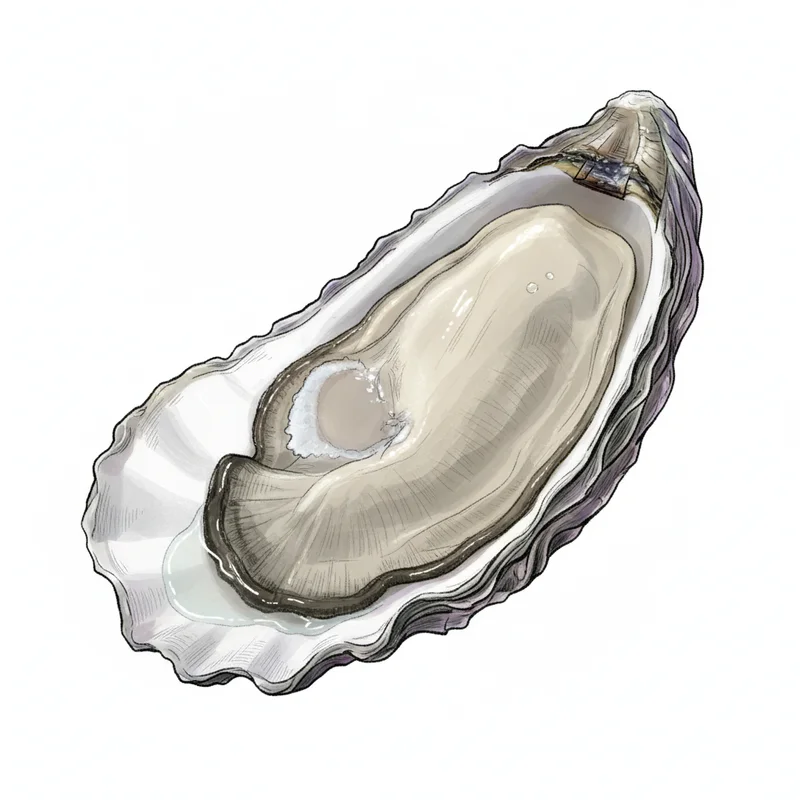
Violet Cove
Crassostrea virginica
A cocktail-size Long Island oyster from Moriches Bay, grown in floating cages between two ocean inlets by former WNBA player Sue Wicks. Salty up front with a buttery, lobster-rich finish.
At a Glance
Violet Cove is an Eastern oyster (Crassostrea virginica) from the US East Coast. It is notably briny (4/5 brininess) and subtly sweet (2/5 sweetness), with briny, buttery flavors and a finish that is buttery and rich, like lobster.
Flavor Profile
Finish
Buttery and rich, like lobster
Expert Notes
Violet Cove is a cocktail-size Long Island oyster grown by Sue Wicks in floating cages on a two-acre lease in Moriches Bay, between two ocean inlets. Constant wave action hardens the shell and deepens the cup, so the oyster holds its liquor. Island Creek Oysters describes a burst of table saltiness up front followed by a buttery, lobster-like richness. In summer the shells take on the violet tint that gives the oyster its name. Origin & Characteristics
- Species
- Crassostrea virginica
- Native to
- USA
- Grown in
- Moriches Bay, East Moriches, Long Island, New York
- Size
- Small (Cocktail size)
- Shell Color
- Gray-white, tinted violet in summer
- Meat Color
- Ivory to light gray
Where to Try It
New York City
- Crave Fishbar Midtown East
On these menus when we checked on September 30, 2026. Raw-bar lists change daily.
What Tasters Say
"A burst of table saltiness up front followed by a buttery, lobster richness on the finish."
saltybutteryrichlobster
"Every Violet Cove oyster is sustainability grown on an idyllic farm between two ocean inlets that nourish our hand raised and tide crafted oysters with pristine briny goodness."
briny
About the Farm
Violet Cove Oyster Co.
Sue Wicks grew up clamming with her bayman father in Center Moriches, played basketball at Rutgers and overseas, and spent six seasons with the New York Liberty from the WNBA's first year in 1997. She took up oyster farming at 50 and runs Violet Cove with a small crew. In 2024 the Responsible Seafood Advocate reported that the farm would produce about 500,000 oysters that season and that Wicks had received New York's first commercial sugar kelp permit.
- Cultivation Method
- floating cages
History & Background
The farm sits in the shallow water of Moriches Bay on Long Island's south shore, between two ocean inlets. Island Creek Oysters credits the flavor to nutrients from the inlets, freshwater springs and a neighboring reserve of old-growth pines.
During the 2020 restaurant shutdown, Violet Cove sold 20,000 oysters to a Nature Conservancy and Pew Charitable Trusts program that used unsold farm oysters to rebuild wild reefs, including one in Moriches Bay.
Did You Know?
- The shells turn violet in summer, which is where the name comes from
- Grower Sue Wicks is in the Women's Basketball Hall of Fame
- Wicks grows sugar kelp next to the oysters
- The Long Island Oyster Growers Association lists the oysters as cocktail size
Sources & References
This information was compiled from 4 sources.
- Violet Cove Oysters from Moriches Bay, NY — Island Creek Oysters
- Violet Cove Oyster Co. — Long Island Oyster Growers Association
- A Slam Dunk for New York Oysters — The Nature Conservancy
- Meet the woman who’s pioneering commercial kelp farming in New York — Responsible Seafood Advocate
Similar Oysters
Perky Sea Cups
US East CoastA farmed Charleston oyster from Green Creek, off the Stono River between Johns and James islands. Salty first, then vegetal and buttery with a mineral freshness, in a thick deep-cupped shell ridged in mahogany and cream.
Pleasure House
US East CoastLarge, hand-cultivated oysters from Virginia Beach's legendary Lynnhaven River. Fat and firm with bold briny saltiness, buttery notes, and a smooth, creamy finish. A quintessential Virginia Bay oyster from a boutique family operation.
Duxbury
US East CoastA balanced New England classic. Plump and tender with harmonious briny-sweet flavor, buttery notes, and a clean finish.
Ichabod Flat
US East CoastHand-harvested intertidal oyster from Plymouth's historic mudflats in Cape Cod Bay. Meaty and briny with a buttery, bisque-like richness. Thick shells and firm texture from cold Massachusetts waters.
Lowcountry Cups
US East CoastA farmed South Carolina oyster grown in floating cages on Mosquito Creek in the ACE Basin, an hour south of Charleston. Small and deep-cupped, salty and clean with a buttery note and a crisp finish.
Learn More
The Big Five: A Complete Guide to Commercial Oyster Species
Comprehensive guide to C. virginica (Atlantic), C. gigas (Pacific), C. sikamea (Kumamoto), O. lurida (Olympia), and O. edulis (European Flat)
Read article → Biology & SpeciesThe Atlantic Oyster (C. virginica): From Maritime Brine to Gulf Sweetness
Deep dive into America's indigenous East Coast oyster - flavor profiles, regional variations, and famous varieties
Read article → Merroir & EnvironmentWhat Is Merroir? How Water Shapes Oyster Flavor
Merroir is the marine version of terroir: how salinity, temperature, tides, and plankton in the growing water shape an oyster's flavor. The science, plus how to taste it.
Read article →