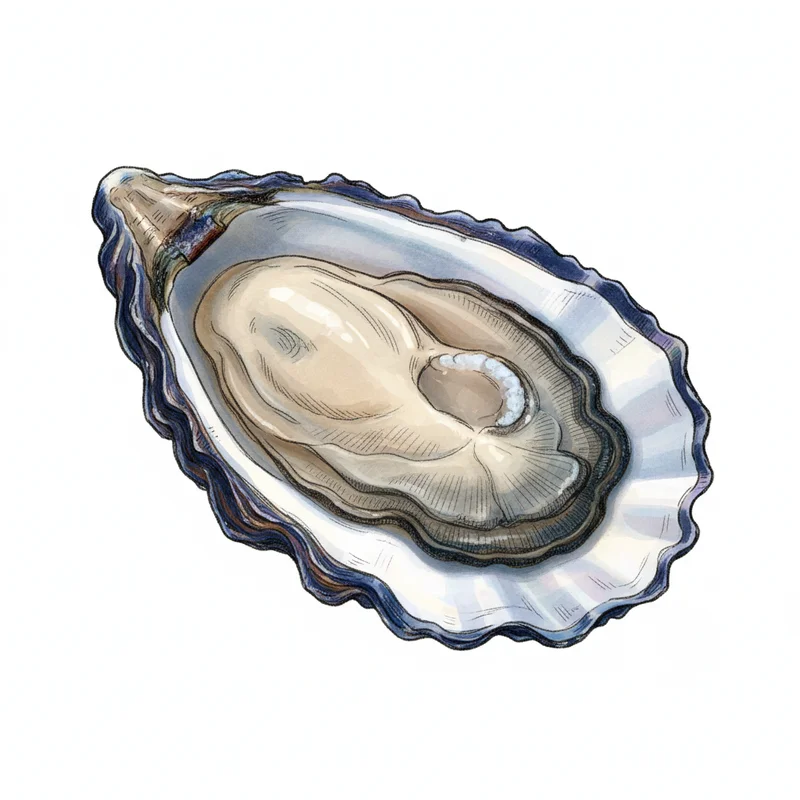
Indigo
Crassostrea gigas
A tumbled Pacific oyster grown in suspended cages beside a kelp farm at Hood Head, Washington. High salinity, savory umami and a cucumber finish.
At a Glance
Indigo is a Pacific oyster (Crassostrea gigas) from the US West Coast. It is notably briny (4/5 brininess) and subtly sweet (2/5 sweetness), with briny, umami, cucumber flavors and a finish that is savory, with cucumber.
Flavor Profile
Finish
Savory, with cucumber
Expert Notes
Indigo oysters grow in suspended cages off Hood Head, at the entrance to Washington's Hood Canal, in about 60 feet of cold, fast-moving water. The site is a five-acre shellfish and seaweed farm run by Blue Dot Sea Farms, so the oysters share the water with kelp lines; Baywater Shellfish, an affiliated farm, sells them. They are tumbled mechanically in a FlipFarm system and reach 2.5 to 3 inches in 12 to 18 months. Baywater and Pangea Shellfish give the same tasting note: high salinity, succulent umami and a cucumber finish. The note comes from the seller and its distributor only, so the scores here are provisional. Origin & Characteristics
- Species
- Crassostrea gigas
- Native to
- Japan
- Grown in
- Hood Head, northern Hood Canal, Washington
- Size
- Small (2.5-3 inches)
- Shell Color
- Tumbled shell
- Meat Color
- Cream to ivory
Where to Try It
Seattle
- Elliott's Oyster House Waterfront
- The Walrus and the Carpenter Ballard
- Westward Lake Union, north shore
On these menus when we checked on October 1, 2026. Raw-bar lists change daily.
About the Farm
Baywater Shellfish
Est. 1990Dr. Joth Davis and his wife Karen founded Baywater in 1990 to grow shellfish while protecting Thorndyke Bay and Hood Canal. Indigo is grown on the Hood Head farm of Blue Dot Sea Farms, which calls Baywater a close friend and affiliate farm and says Baywater markets the oyster exclusively to restaurants.
- Cultivation Method
- FlipFarm suspended cages, mechanically tumbled
History & Background
Blue Dot Sea Farms operates a five-acre shellfish and seaweed farm off Hood Head in the northern part of Hood Canal, under a lease from the Washington Department of Natural Resources. It says the site has strong tidal currents and a good supply of natural phytoplankton, and that growing seaweed and shellfish together improves water quality and creates habitat.
Seattle menus list the oyster both as Indigo and as Baywater Indigo, and one gives Thorndyke Bay, Baywater's home water, as the origin. The grower, the seller and Pangea all give Hood Head.
Did You Know?
- Grown in roughly 60 feet of water
- Reaches market size in 12 to 18 months
- Pangea Shellfish suggests pairing them with a dry Riesling
- Blue Dot Sea Farms also makes a kelp snack called Seacharrones
Sources & References
This information was compiled from 3 sources.
- Indigo Oyster — Pangea Shellfish Oysterology
- Baywater Indigos — Baywater Shellfish
- Blue Dot Sea Farms — Blue Dot Sea Farms
Similar Oysters
Spring Creek
US West CoastA briny Pacific Northwest oyster prized for its firm texture and intense umami flavor. Best in early spring when amino acids create peak savory intensity with a clean, assertive finish.
Sister Point
US West CoastBag-started, beach-finished oyster from southern Hood Canal's Great Bend. Thick-shelled with intensely salty, briny flavor and a distinctive cucumber-seaweed finish characteristic of South Sound oysters.
Penn Cove
US West CoastThe definitive Pacific oyster. Firm, briny meats with bright cucumber and umami notes, finished clean and steely.
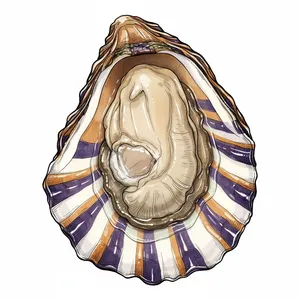
Carlsbad Blonde
US West CoastSouthern California's signature oyster from Carlsbad's Agua Hedionda Lagoon. Grown in suspended culture with distinctive glassy, striped shells. Strongly briny with refreshing melon and cucumber notes, balanced between briny and sweet.
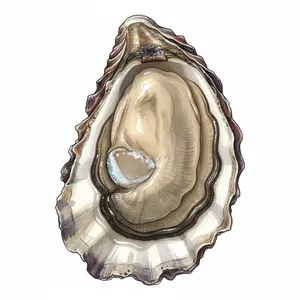
Cliff Point
US West CoastA tide-tumbled Pacific oyster from Henderson Inlet in South Puget Sound, grown by Perkins Family Farms. Crisp brine and gentle umami, with a light melon finish and no grit.
Learn More
The Big Five: A Complete Guide to Commercial Oyster Species
Comprehensive guide to C. virginica (Atlantic), C. gigas (Pacific), C. sikamea (Kumamoto), O. lurida (Olympia), and O. edulis (European Flat)
Read article → Biology & SpeciesThe Pacific Oyster (C. gigas): Cream, Cucumber, and the Japanese Legacy
Understanding one of the world's most widely farmed oysters - from Japanese origins to West Coast dominance
Read article → Merroir & EnvironmentWhat Is Merroir? How Water Shapes Oyster Flavor
Merroir is the marine version of terroir: how salinity, temperature, tides, and plankton in the growing water shape an oyster's flavor. The science, plus how to taste it.
Read article →