Ocean-forward Oysters
4 oysters in our guide list ocean-forward as a flavor note, as a primary note for 1 of them. Examples include Olde Salt, Great White, and Onset.
Ocean-forward oysters
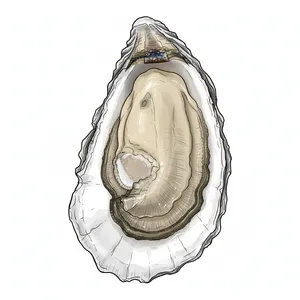
Great White
US East CoastCape Cod's flagship oyster from Barnstable Harbor. Large with thick shells and dense, savory meats. Distinctively briny and mineral-forward with a powerful ocean taste shaped by twice-daily tidal flows.
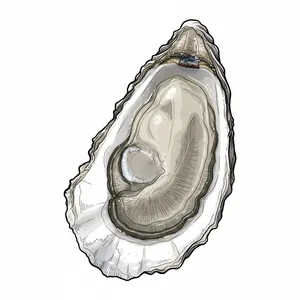
Olde Salt
US East CoastRack and bag cultured oyster from Chincoteague Bay, Virginia. Bold, intensely briny with the truest taste of the ocean, thanks to direct Atlantic water influx. Smooth, clean finish despite high salinity. Olde Salt is Rappahannock Oyster Co.'s brand name; Chincoteague, profiled separately, is the appellation it comes from.
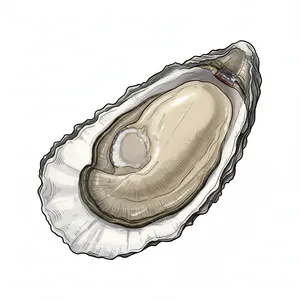
Onset
US East CoastBold Cape Cod oyster from Onset, Massachusetts. Intensely briny with strong vegetal seaweed notes and firm, meaty texture. Grown at Fisherman's Cove with access to massive water flow and nutrients.
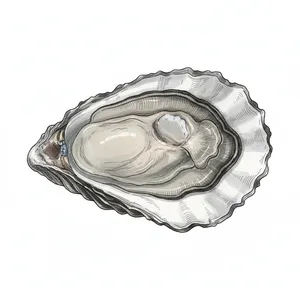
Royal Courtesan
Canada West CoastBeach-raised Pacific oyster from Cortes Island, BC. Bold, briny, and metallic with robust mineral intensity and a strong, clean finish. Cultivated by renowned oyster farmer Brent Petkau.
Common questions
Which oysters have ocean-forward flavor notes?
4 oysters in our guide list ocean-forward as a flavor note, as a primary note for 1 of them. Examples include Olde Salt, Great White, and Onset.
Where do oysters with ocean-forward notes come from?
The largest group comes from the US East Coast (3 of 4), followed by the Canada West Coast (1).
What flavors often appear with ocean-forward in oysters?
Among these oysters, the notes that appear most often alongside ocean-forward are briny (4 of 4), clean (3 of 4), and bold (2 of 4).
What pairs well with oysters that have ocean-forward notes?
The pairings our guide lists most often for them are Muscadet (4 of 4), Chablis (3 of 4), and Champagne (3 of 4).