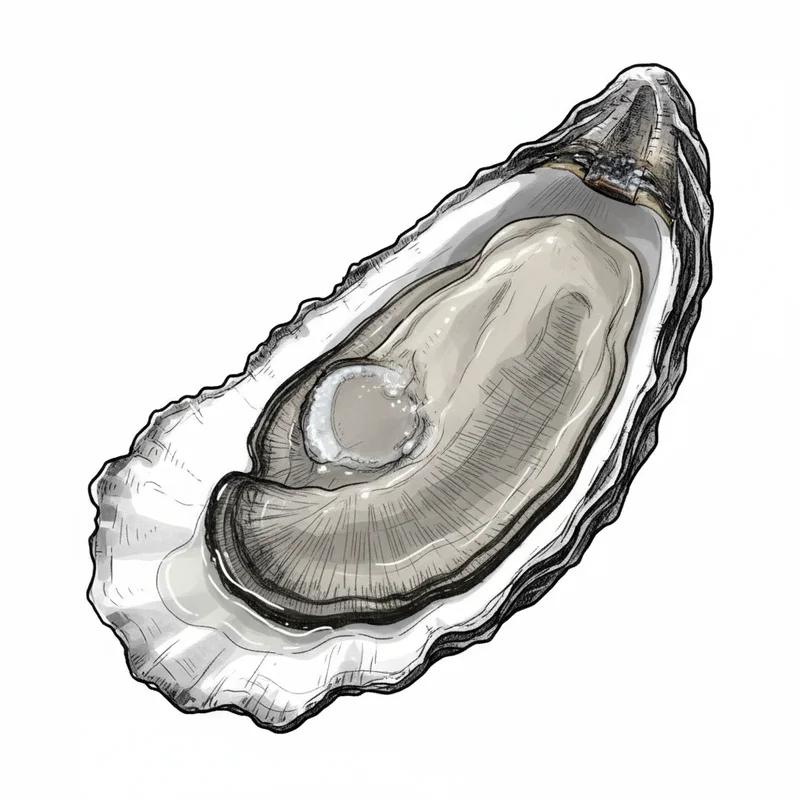
Island Creek
Crassostrea virginica
The flagship of New England oysters. Briny and buttery with firm meat, vegetal richness, and a distinctive lobster-stock finish.
At a Glance
Island Creek is an Eastern oyster (Crassostrea virginica) from the US East Coast. It is notably briny (4/5 brininess) and distinctly sweet (4/5 sweetness), with briny, buttery, sweet flavors and a finish that is long, sweet, mossy with lobster-stock savoriness.
Flavor Profile
Finish
Long, sweet, mossy with lobster-stock savoriness
Expert Notes
The flagship of New England oysters delivers a quintessential Cape Cod experience. Strong salinity up front gives way to rich, buttery vegetal notes reminiscent of a New England clambake—sweet corn, shellfish, and salt. Raised in the cold, mineral-rich waters of Duxbury Bay and finished on the ocean floor, these oysters develop firm, meaty texture and a complex, highly segmented flavor profile with a distinctive lobster-stock finish. Origin & Characteristics
- Species
- Crassostrea virginica
- Native to
- USA
- Grown in
- Duxbury Bay, Massachusetts
- Size
- Medium to Large (2-4 inches)
- Shell Color
- White and black
- Meat Color
- Light gray
Where to Try It
Boston
- Neptune Oyster North End
- Row 34 Fort Point, Seaport
- Select Oyster Bar Back Bay
On these menus when we checked on October 1, 2026. Raw-bar lists change daily.
Charleston
- NICO Oysters + Seafood Shem Creek, Mount Pleasant
On these menus when we checked on October 1, 2026. Raw-bar lists change daily.
Chicago
- Hugo's Frog Bar & Fish House Gold Coast
On these menus when we checked on October 1, 2026. Raw-bar lists change daily.
New York City
- Grand Central Oyster Bar & Restaurant Midtown East
On these menus when we checked on September 30, 2026. Raw-bar lists change daily.
San Francisco
- Foreign Cinema Mission District
On these menus when we checked on October 1, 2026. Raw-bar lists change daily.
What Tasters Say
Across 12 sources, tasters describe this oyster as:
Unique notes: lobster-stock, bisque, seaweed, citrus, vegetal
"The quintessential East Coast oyster, they're consistent yet complex, with up-front notes of ocean brine and seaweed, and a smooth, sweet finish. Deep cups encourage plump meats for a toothy, chewy bite you can really sink your teeth into. Well balanced from beginning to end."
brinyseaweedsweetsmoothchewy
"With a highly segmented flavor profile, strong salinity up front gives way to vegetal, buttery richness and a long sweet finish. These complex flavors are attributed to a life spent on the ocean floor, dug into the mineral-rich mud of Duxbury Bay."
saltyvegetalbutterysweetmineral
"Island Creeks have an amazing butter-and-brine taste. They are as salty as all getout, making them the classic Boston partner for a pint of Sam Adams Lager, and every single one is delightfully firm and beautifully clean tasting."
butterybrinysaltyfirmclean
"Midsized white-and-black shells and firm briny meat with a lobster-stock finish. Island Creek is the best known of the many Duxbury Bay oysters."
brinyfirmlobster-stock
"Rich with a bisque note on the finish. Firm meats, but petite size. They typically have an attractive, more roundish shell which is interesting."
richbisquefirm
"Briny with well-balanced seaweed flavor at a perfect level of mildness."
brinyseaweedmildbalanced
"A pop of salt faded into oblivion as the sweet, citrusy tastes within the oyster emerged after a few chews. This oyster possesses a wonderfully fresh brininess, but a clean finish. The meat is moderate."
saltysweetcitrusbrinyclean
"Medium brine, sweet, slightly meaty"
brinysweetmeaty
"Right away, what I tasted first was the brine. There wasn't a ton of sweetness or umami, but it was a good-size oyster, fairly easy to shuck."
brinylow sweetnesslow umami
"It had a lot of brine up front, which is nice. There is a little bit of sweetness but not much umami. This would be a great beginner oyster."
brinyslightly sweetlow umami
"It's got a nice sweet, nice briny, salty finish and a lot of umami. I'm gonna give it a 9.2 out of 10."
sweetbrinysalty finishumami
About the Farm
Island Creek Oysters
Est. 1992Founded by Skip Bennett in Duxbury, Massachusetts, after an unsuccessful attempt at growing clams. For eight years, Skip was the only person growing shellfish in Duxbury Bay, a location he would later describe as 'The Napa Valley of Oyster Farming.'
- Cultivation Method
- bottom culture
History & Background
Island Creek Oysters were the first to be farmed in the Duxbury/Kingston/Plymouth Bay complex where the Pilgrims landed, which has since become a celebrated oyster region. The oyster was named by Sandy Ingber, the legendary chef at Grand Central Oyster Bar, after Skip Bennett's hometown neighborhood of Island Creek in Duxbury.
Island Creeks have been served at state dinners at the White House and can be found at several Michelin starred restaurants across the country. They won Best Oyster at the largest blind oyster tasting ever held and are the most frequently recommended oyster by servers.
Did You Know?
- Duxbury Bay has drastic eleven-foot tides, which means twice a day the Bay drains and re-fills with cold, algae-filled water
- At high tide, there are 35 billion gallons of water in the bay; at low tide, just 7 billion gallons
- At any given time, there are 15-20 million oysters in Duxbury Bay
- The name 'Island Creek' was coined by Sandy Ingber at Grand Central Oyster Bar, who told Skip the original name 'Duxburies' sucked
- Island Creek Oysters operates one of only four hatcheries in the Northeast
Sources & References
This information was compiled from 12 sources.
- Island Creek Oysters from Duxbury, MA — Island Creek Oysters
- Island Creek - The Oyster Guide — The Oyster Guide
- Island Creek Oyster - Oysterater — Oysterater
- Island Creek Oysters - Chefs Resources — Chefs Resources
- Skip Bennett on the Origins of Island Creek Oysters — The Scout Guide
- Tide to Table Profile: Island Creek Oysters — NOAA Fisheries
- Oyster Tasting Log - Peek & Eat — Peek & Eat Blog
- Oysters & Chablis Pairing Guide — The Oyster Guide
- Meet Our Farmers: Skip Bennet of Island Creek Oyster Farm — Seattle Fish Company
- I Tried Island Creek Oysters #seafood #oysters #tastetest — YouTube
- Island Creek Oysters? #oystertastetest #oysters — YouTube
- Island Creek Oysters Taste Test 🦪😮💨 #oysters #seafood — YouTube
Island Creek: A Closer Look
- Origin
- Duxbury Bay, Massachusetts
- Species
- Eastern oyster (Crassostrea virginica)
- Grower
- Island Creek Oysters, founded by Skip Bennett
- Name
- The Duxbury neighborhood where Bennett grew up, chosen by Sandy Ingber of Grand Central Oyster Bar
- Cultivation
- Hatchery seed, raised in floating bags, then finished loose on the bay bottom
- Flavor
- Butter and brine: strong salt up front, then seaweed, sweetness, and a mossy finish
Island Creek is the flagship oyster of Duxbury Bay, Massachusetts, and one of the best-known farmed oysters in the United States. It is an Eastern oyster, Crassostrea virginica, grown by Island Creek Oysters, the farm Skip Bennett started after a first attempt at growing clams. The bay itself is an unusual home for oysters: it never had a wild oyster population, probably because the water is too cold for oysters to spawn there. Every Island Creek begins life in the farm's own hatchery.
The name came from a raw bar, not a marketing meeting. Bennett first sold his oysters as "Duxburies." Sandy Ingber, the chef at Grand Central Oyster Bar in New York, did not like that name. When Bennett said he grew up near a corner of the bay called Island Creek, Ingber told him that was the name and to never change it.
Young oysters start in floating rack-and-bag gear with upwellers. The crew washes and shakes them about twice a week, which chips off the thin new shell edge and pushes the oyster to grow a deeper cup and a stronger shell. After about six months, the oysters are planted by hand on the sand and mud of the bay floor, where they spend their last months loose on the bottom. The earliest harvest comes at about 18 months, and much of it is done by hand on the flats at low tide.
Duxbury Bay is shallow, and its tides swing about ten feet. The bay holds about 35 billion gallons of water at high tide and about 7 billion at low tide, so almost all of the water changes twice a day. Each tide brings in cold, plankton-rich water, which keeps the oysters firm and briny all year. The bay also stays at or below about 65°F, under the temperature at which oysters spawn, so Island Creeks do not go soft and milky in summer and are available year-round.
On the half shell, an Island Creek is the classic New England butter-and-brine oyster. Strong salt comes first, then seaweed and a rich, buttery sweetness, and then a clean, mossy finish. The deep cup holds a plump, firm, chewy bite. Rowan Jacobsen calls it a natural partner for a Boston lager, and servers recommend it more than any other oyster. Sizes run from petites of about 2 inches up to 4-inch larges.
Sources for this deep dive
This deep dive was drafted from the cited sources below and is under editorial review.
- Island Creek — The Oyster Guide
- Tide to Table Profile: Island Creek Oysters — NOAA Fisheries
- Island Creek Oysters — Chef's Resources
- Island Creek Oysters from Duxbury, MA — Island Creek Oysters
Similar Oysters
East Beach Blonde
US East CoastFarmed in floating cages in Ninigret Pond, Rhode Island. Distinguished by pale golden shells and creamy, golden flesh with a sophisticated flavor profile featuring strong initial brine, distinctive buttery notes, and a delicate sweet finish.
Norumbega
US East CoastRobust, meaty oysters from Maine's fabled Damariscotta River. Hand-harvested by scuba divers after 2-3 years bottom-planted. Sweet, buttery opening transitions to refreshing brininess with firm texture and beautiful deep cups.
Scorton Creek
US East CoastPremium Cape Cod oyster from Barnstable Harbor's Great Marsh. Bright, buttery, and exceptionally briny with firm, crisp ivory meats in deep cups. A standout from one of North America's great oyster merroirs.
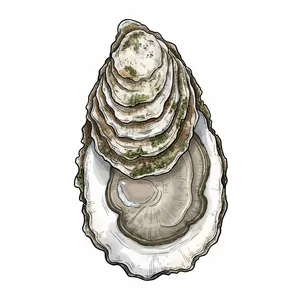
Whaleback Cocktail
US East CoastSmall Maine cocktail oyster from John's River Estuary. Bottom-grown and cage-floated with crisp Atlantic brininess, buttery texture, and a clean sweet finish with mineral notes.
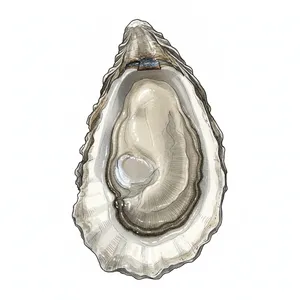
Great Gun
US East CoastA wave-tumbled Long Island oyster from Moriches Bay, grown in floating bags near Moriches Inlet. Salty and savory up front, then rich and notably sweet at the finish.
Learn More
The Big Five: A Complete Guide to Commercial Oyster Species
Comprehensive guide to C. virginica (Atlantic), C. gigas (Pacific), C. sikamea (Kumamoto), O. lurida (Olympia), and O. edulis (European Flat)
Read article → Biology & SpeciesThe Atlantic Oyster (C. virginica): From Maritime Brine to Gulf Sweetness
Deep dive into America's indigenous East Coast oyster - flavor profiles, regional variations, and famous varieties
Read article → Merroir & EnvironmentWhat Is Merroir? How Water Shapes Oyster Flavor
Merroir is the marine version of terroir: how salinity, temperature, tides, and plankton in the growing water shape an oyster's flavor. The science, plus how to taste it.
Read article →