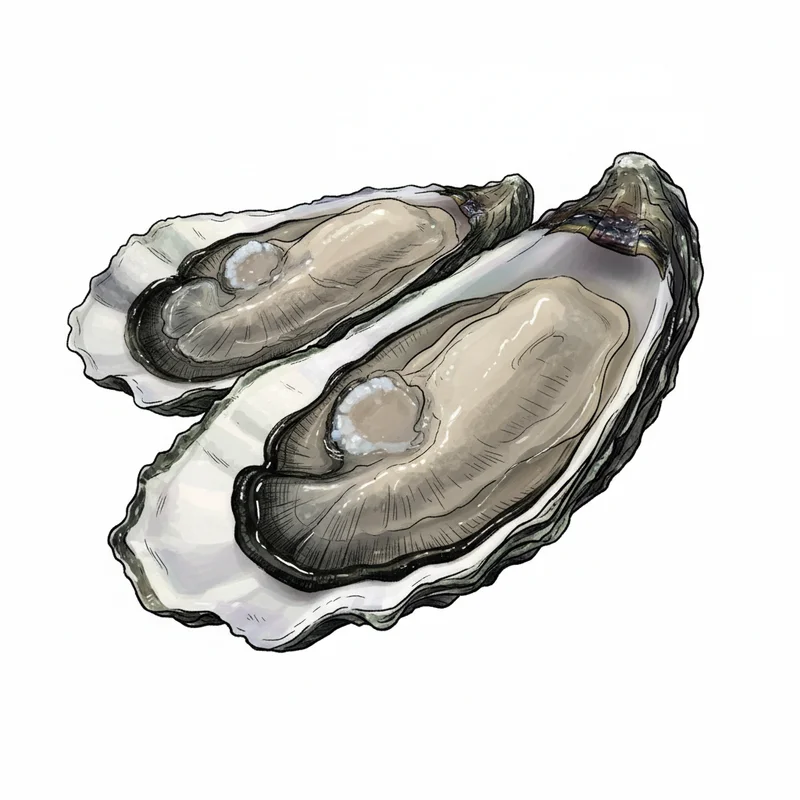
Glidden Point
Crassostrea virginica
The definitive Maine oyster from the Damariscotta River. Bottom-cultured in frigid waters, producing thick, heavy shells with deep cups and firm meats. Crisp and complex with pronounced brininess balanced by sweetness.
At a Glance
Glidden Point is an Eastern oyster (Crassostrea virginica) from the US East Coast. It is notably briny (4/5 brininess) and moderately sweet (3/5 sweetness), with briny, sweet flavors and a finish that is crisp, clean, complex.
Flavor Profile
Finish
Crisp, clean, complex
Expert Notes
Glidden Point oysters are the definitive Maine oysters, the standard bearers of the Damariscotta River. Grown slowly in one of the cleanest and coldest estuaries in the country at depths of about 40 feet, they develop thick, heavy shells with deep cups and firm, plump meats. Their crisp, complex flavor combines pronounced brininess with notable sweetness, creating a well-balanced profile that showcases the pristine Atlantic waters. The slow grow-out in frigid waters results in rock-hard shells and succulent, full-bodied meats. Origin & Characteristics
- Species
- Crassostrea virginica
- Native to
- USA
- Grown in
- Damariscotta River, Edgecomb, Maine
- Size
- Medium to Large (2-5 inches)
- Shell Color
- Black-and-white, green-toned
- Meat Color
- Ivory to light gray
Where to Try It
Boston
- Neptune Oyster North End
On these menus when we checked on October 1, 2026. Raw-bar lists change daily.
New York City
- Crave Fishbar Midtown East
- Cull & Pistol Oyster Bar Chelsea
On these menus when we checked on September 30, 2026. Raw-bar lists change daily.
Portland, Maine
- Eventide Oyster Co. Middle Street
On these menus when we checked on October 1, 2026. Raw-bar lists change daily.
San Francisco
- Waterbar Embarcadero
On these menus when we checked on October 1, 2026. Raw-bar lists change daily.
What Tasters Say
Across 10 sources, tasters describe this oyster as:
Unique notes: grassy, savory, chewy, crisp
"The selects were spectacular! Meaty, juicy, just the right brine with some grass notes."
meatyjuicybrinygrassy
"The oysters have a perfect balance to the brine. Sweet, firm and plump, these buttery beauties are easy to shuck."
brinysweetfirmplumpbuttery
"Briny, plump, with a wonderful texture."
brinyplump
"Wonderfully briny, meaty. Great oysters and nice folks!"
brinymeaty
"Perfect means: 3.5 inches, deep cup, strong shell, intense brine balanced by rich, savory, lingering sweetness."
brinysweetsavoryrich
"The extremely cold, salty water produces slow-growing oysters with fantastic texture and brine at the upper end of the register. These are the soft pretzels of the oyster world, chewy and salty and heaven with a cold beer."
saltybrinychewy
"A crisp, briny, salty taste from the deep cup is the result after harvesting the Glidden Point."
crispbrinysalty
"Crisp, briny, and sweet flavor profile with firm, plump meats."
crispbrinysweetfirmplump
"Rich, buttery, and briny with a hint of the sea."
richbutterybriny
"I love the wilds, says Ryan McPherson, owner of Glidden Point. Like all oysters, the taste of a wild oyster is informed by place."
About the Farm
Glidden Point Oyster Farm
Est. 1987Founded by Barb Scully in 1987, Glidden Point was one of the original farms in the Damariscotta River area. Scully prided herself on taking the time and effort to grow incredible oysters. In 2016, Ryan McPherson and Jonathan took over the business from Barb, maintaining the same impeccable standards.
- Cultivation Method
- bottom culture
History & Background
Glidden Point Oyster Farm was established in 1987 by Barb Scully, making it one of the pioneering oyster farms in Maine's Damariscotta River. The Damariscotta River has a rich oyster history dating back over 2,000 years, as evidenced by the Whaleback Shell Midden - a massive 1,000-foot wide, 30-foot tall pile of oyster shells left by Native American Wabanaki people who inhabited the area for over 12,000 years.
Glidden Points are considered the definitive Maine oysters and the standard bearers against which all eastern oysters must be measured. They have been legendary for over 25 years and are one of the priciest and most prized oysters in the country.
Did You Know?
- Glidden Points are one of the only oysters in the world hand-harvested by divers
- The oysters are not harvested until 4 years of age, making them exceptionally slow-grown
- The farm operates on four different lease sites in the Damariscotta River, each with unique bathymetry producing distinct flavor profiles
- One woman (Barb Scully) oversaw every single oyster for decades, being a perfectionist about growing them slowly in very cold water
- The oysters are grown 40 feet deep in frigid water
Sources & References
This information was compiled from 10 sources.
- Glidden Point Oyster — OysteRater
- Glidden Point Single-Lease Reserves — The Oyster Guide
- Maine Oyster Roundup — The Oyster Guide
- The Magic of The Damariscotta River — Glidden Point Oyster Farms
- Glidden Point Oysters — Chefs Resources
- Wild Oysters Make a Comeback in Maine — Civil Eats
- Glidden Point Oysters — Seacore Seafood
- Glidden Point Oyster Farm — Anne Saxelby Legacy Fund
- To Eat Oysters Better, Treat Them Like Wine — The New York Times
- The Damariscotta Oyster Celebration: 2000 Years in the Making — The Lady Oyster
Glidden Point: A Closer Look
- Origin
- Damariscotta River estuary, Edgecomb, Maine
- Species
- Eastern oyster (Crassostrea virginica)
- Grower
- Glidden Point Oyster Farm, founded in 1987 by Barb Scully; run by Ryan McPherson since 2016
- Cultivation
- Bottom-planted in cold water and slow-grown, often 4 years or more
- Harvest
- One of the only oysters in the world hand-harvested by divers
- Flavor
- Intense brine balanced by rich, savory, lingering sweetness
Glidden Point is the oyster that many people use to define a Maine oyster. Rowan Jacobsen calls it the standard against which all Eastern oysters must be measured. It is an Eastern oyster, Crassostrea virginica, grown on the Damariscotta River in Edgecomb, Maine. Barb Scully started the farm in 1987, and for more than 25 years she farmed it to an exacting standard. Ryan McPherson took over the business in 2016 and keeps the same standards.
The Damariscotta is a tidal estuary, not a true river. Its tides rise and fall up to eleven feet and move about 30 billion gallons of water on each cycle. The salinity is about 28 to 32 parts per thousand, and the water averages about 39 to 47°F. It is some of the cleanest coastal water in Maine. Oysters have grown here for thousands of years, as large ancient shell heaps along the river show.
Glidden Points grow slowly on purpose. The farm plants them on the bottom of the cold river and usually does not harvest them until they are about 4 years old. On the deepest lease, at 20 to 40 feet, the oysters can need 4 to 5 years to reach market size. The cold water and slow growth give them thick, heavy, rock-hard shells and deep cups. Divers harvest many of them by hand, which makes Glidden Point one of the only diver-harvested oysters in the world.
The farm works several leases, and each one gives the oysters a slightly different character. Scully's shallowest lease grows oysters fast and gives them a strong, savory umami. The deepest lease gives the mildest oysters and the hardest shells. A cold, high-current site called the Ledge gives very sweet oysters that take 4 to 6 years to grow.
Jacobsen describes the ideal Glidden Point as 3.5 inches long, with a deep cup, a strong shell, and intense brine balanced by rich, savory, lingering sweetness. Tasters also describe firm, plump meat and a clean, crisp finish. Glidden Points are among the priciest and most prized oysters in the country.
Sources for this deep dive
This deep dive was drafted from the cited sources below and is under editorial review.
- Glidden Point Single-Lease Reserves — The Oyster Guide
- Maine Oyster Roundup — The Oyster Guide
- Glidden Point Oyster — Oysterater
- The Magic of The Damariscotta River — Glidden Point Oyster Farms
Similar Oysters
Blue Point (Great South Bay)
US East CoastThe legendary Blue Point oyster, restored to its original Great South Bay home. Full-salt brininess with sweet honeydew finish and distinctive pine and anise notes. A historic American favorite since the 1820s.
Broadwater
US East CoastA Virginia oyster grown in Chesapeake waters and finished on the Atlantic side for enhanced salinity. Plump, smooth meat with lively brininess and complex flavor that sets it apart from typical Chesapeake oysters.
Bulls Bay
US East CoastHistoric South Carolina oyster from Bulls Bay. Large and meaty with a firm texture, pronounced briny flavor, and distinctive sweet finish. Shaped by high salinity coastal waters with peak flavor in colder months.
Fishers Island
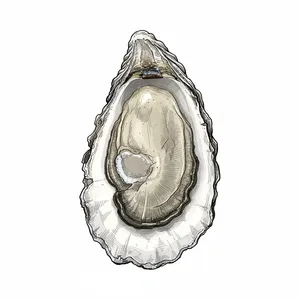
US East CoastA distinctively bold, deep-cupped Atlantic oyster from Block Island Sound. Grown in suspended lantern nets by a family farm for over 40 years. Briny with focused savory notes, strikingly clean finish, and firm texture.
Mystic
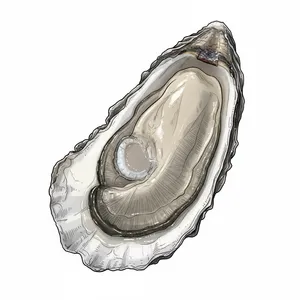
US East CoastBottom-planted Connecticut oyster from the Mystic River. Firm, meaty texture with intense brininess from high salinity waters, finishing with a distinctive sweet note. Thick, irregular shells house a robust flavor.
Learn More
The Big Five: A Complete Guide to Commercial Oyster Species
Comprehensive guide to C. virginica (Atlantic), C. gigas (Pacific), C. sikamea (Kumamoto), O. lurida (Olympia), and O. edulis (European Flat)
Read article → Biology & SpeciesThe Atlantic Oyster (C. virginica): From Maritime Brine to Gulf Sweetness
Deep dive into America's indigenous East Coast oyster - flavor profiles, regional variations, and famous varieties
Read article → Merroir & EnvironmentWhat Is Merroir? How Water Shapes Oyster Flavor
Merroir is the marine version of terroir: how salinity, temperature, tides, and plankton in the growing water shape an oyster's flavor. The science, plus how to taste it.
Read article →