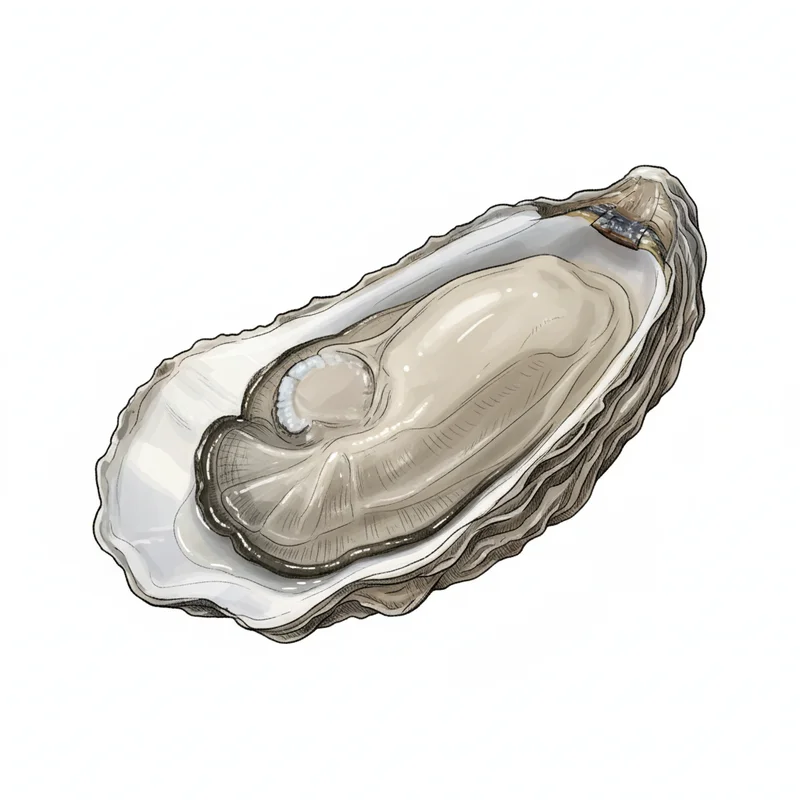
Dixon Point
Crassostrea virginica
A small choice oyster from the entrance to Bouctouche Bay, New Brunswick, grown by The Great Little Harbour Seafood Company. Salty up front with a nutty, sweet finish.
At a Glance
Dixon Point is an Eastern oyster (Crassostrea virginica) from the Canada East Coast. It is notably briny (4/5 brininess) and moderately sweet (3/5 sweetness), with briny, nutty, sweet flavors and a finish that is nutty and sweet.
Flavor Profile
Finish
Nutty and sweet
Expert Notes
Dixon Point is a small New Brunswick oyster from The Great Little Harbour Seafood Company, which calls it the younger sister of its Chebooktook. It is named for the point at the entrance to Bouctouche Bay, a bay the company says has enough wave action to shape the shells and plenty of phytoplankton. Every source describes the same outline, salt first and then a nutty, sweet finish, and they differ only on how much salt. The grower says slightly salty. The sellers J.J. McDonnell and Anchor Fish Market say strong salt, and Amen Street in Charleston lists them as high in salinity and medium in size, so the brine score here leans toward the sellers. The company's name translates Chebooktook, which it gives as the original Mi'kmaq name, meaning great little harbour. Origin & Characteristics
- Species
- Crassostrea virginica
- Native to
- North America
- Grown in
- Bouctouche Bay, New Brunswick
- Size
- Small to Medium (no measurement published)
- Shell Color
- Gray-white to tan
- Meat Color
- Ivory to light gray
Where to Try It
Charleston
- Amen Street Fish & Raw Bar Historic district
On these menus when we checked on October 1, 2026. Raw-bar lists change daily.
What Tasters Say
Across 4 sources, tasters describe this oyster as:
Unique notes: small choice oyster with attitude
"The Dixon Point is a small choice oyster with attitude, characterized by a slightly salty taste with a nutty, sweet finish."
mild brinenuttysweet
"Dixon Point is a choice oyster characterized by a salty taste with a nutty, sweet finish. Salinity: Strong Salt"
saltynuttysweet
"These small, choice oysters are known for their strong salinity, complemented by a nutty, sweet finish."
saltynuttysweet
"New Brunswick, Medium Size, High Salinity"
high salinity
About the Farm
The Great Little Harbour Seafood Company
The company farms oysters in Bouctouche Bay and lists an office in Shediac, New Brunswick. Its site names partners Pierre Nadeau and Serge LeBlanc and three oyster brands besides Dixon Point: Chebooktook, Belle du Jour and Gaia. It explains its name as the meaning of Chebooktook, which it gives as the original Mi'kmaq name.
History & Background
The grower places Dixon Point at the entrance of Bouctouche Bay and describes the bay as having good wave action for shell shape and good quantities of phytoplankton. We found no published details on gear, growing time or size; the grower and Anchor Fish Market call it small, and one Charleston menu lists it as medium.
Amen Street Fish & Raw Bar in Charleston listed Dixon Points on its daily oyster list when we read it on 2026-10-01. The seafood distributor J.J. McDonnell lists the oyster for its customers.
Did You Know?
- The grower calls it the younger sister of the Chebooktook oyster
- Named for the point at the entrance to Bouctouche Bay
- Described by its grower as a small choice oyster with attitude
Sources & References
This information was compiled from 4 sources.
- The Great Little Harbour Seafood Company — The Great Little Harbour Seafood Company
- Dixon Point — J.J. McDonnell
- Oyster - Dixon Point (NB) — Anchor Fish Market
- Food menu — Amen Street Fish & Raw Bar
Similar Oysters
Gooseberry Bay
Canada East CoastFarm-raised in floating bags in Malpeque Bay, Prince Edward Island. Briny with sweet, nutty astringency, firm plump meats, and abundant rich liquor from the nutrient-rich Cape Shore waters.
Barachois
Canada East CoastA Prince Edward Island oyster from the waters off Cymbria on the north shore, sold in choice and cocktail sizes. Deep cups and clean shells, with a bright, clean flavor that balances sweetness and salt.
French Kiss
Canada East CoastA larger, mature Beausoleil from Miramichi Bay, New Brunswick. Full and plump with sharp brininess, clean taste, and a sweet finish. Hand-packed with exceptional attention to detail.
Hurricane Island
Canada East CoastHand-harvested from the cold, clean waters of Nova Scotia's Northumberland Strait. Small to medium oysters with intense brininess, firm crisp texture, and a notably sweet finish.
Little Shemogue
Canada East CoastA premium cultured oyster from Southeast New Brunswick's Tormentine Peninsula. Small and plump with medium-high brininess, mineral richness, and a clean, sweet finish. Fresh biscuit aroma makes it an ideal starter oyster.
Learn More
The Big Five: A Complete Guide to Commercial Oyster Species
Comprehensive guide to C. virginica (Atlantic), C. gigas (Pacific), C. sikamea (Kumamoto), O. lurida (Olympia), and O. edulis (European Flat)
Read article → Biology & SpeciesThe Atlantic Oyster (C. virginica): From Maritime Brine to Gulf Sweetness
Deep dive into America's indigenous East Coast oyster - flavor profiles, regional variations, and famous varieties
Read article → Merroir & EnvironmentWhat Is Merroir? How Water Shapes Oyster Flavor
Merroir is the marine version of terroir: how salinity, temperature, tides, and plankton in the growing water shape an oyster's flavor. The science, plus how to taste it.
Read article →